
Committed to the future
GRI Renewable Industries contributes to the development of the wind energy sector, which is key to decarbonizing electricity generation and shifting the economic model toward a more sustainable future. The company is committed to creating long-term value in line with the United Nations Sustainable Development Goals (SDGs).
Value Creation and Sustainable Management Model
Our value creation and sustainable management model is based on trusted relationships with all stakeholders and is structured around three pillars: Environmental, Social, and Corporate Governance (ESG). The goal is to enhance positive impacts on customers, industry, the environment, and society as a whole, while leveraging the growth opportunities offered by this global framework.
Strategic Pillar
GRI Renewable Industries has integrated Sustainability as one of the seven pillars of its 2023/26 Strategic Plan, providing guidelines to drive the growth of industrial activity. The company works along four lines of action: environmental impact, labor relations and human rights, ethics, and supply chain.
We believe in a sustainable future
We work to grow as a strong and responsible company, aligned with the Sustainable Development Goals and human rights, complying with the most demanding quality, environmental, and safety standards, with the aim of strengthening relationships with our stakeholders.
Through the Sustainability Policy, a global reference framework is established that sets out our main commitments.

Learn the details of all our progress
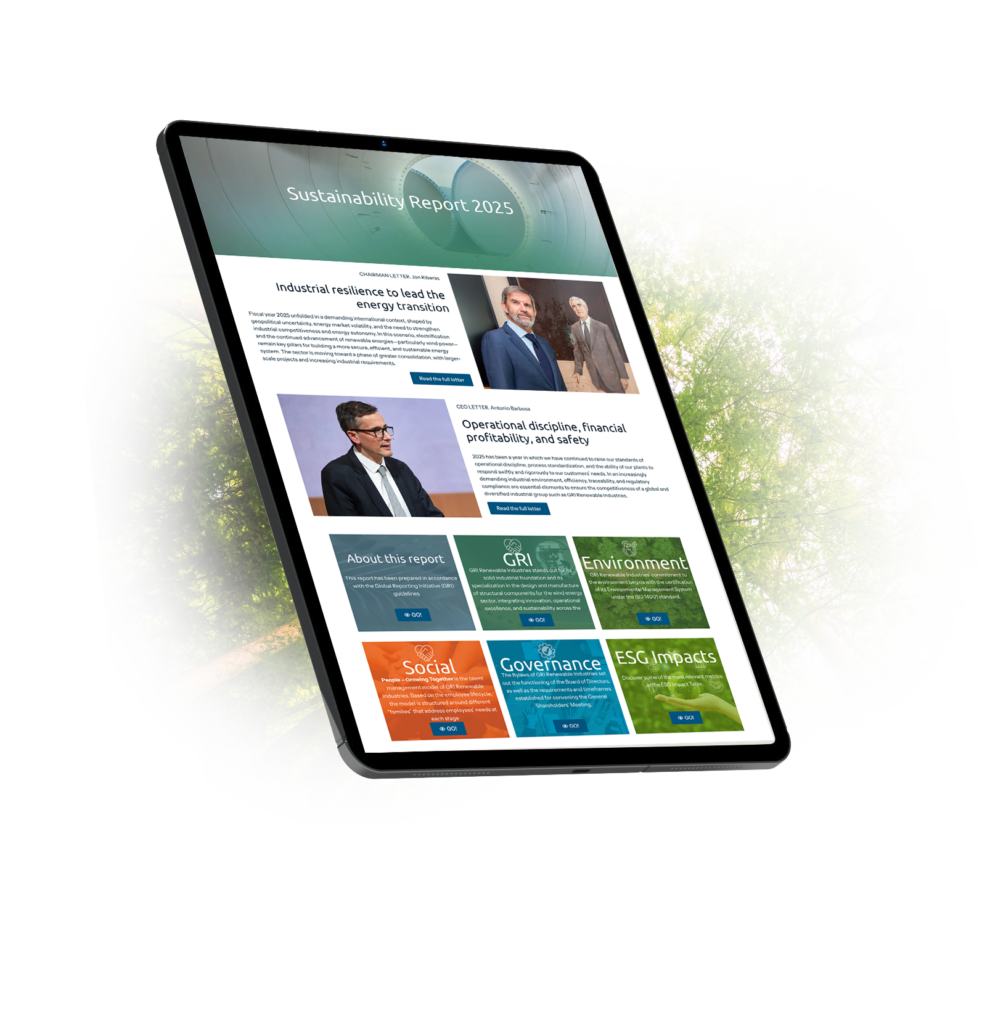
The 2025 Sustainability Report has been prepared in accordance with the information and indicators established in the Global Reporting Initiative (GRI) Standard reference guide and the relevant topics derived from the Materiality Study.
GRI Renewable Industries conducts independent external verification with the company EY.
Sustainability Indices
ECOVADIS
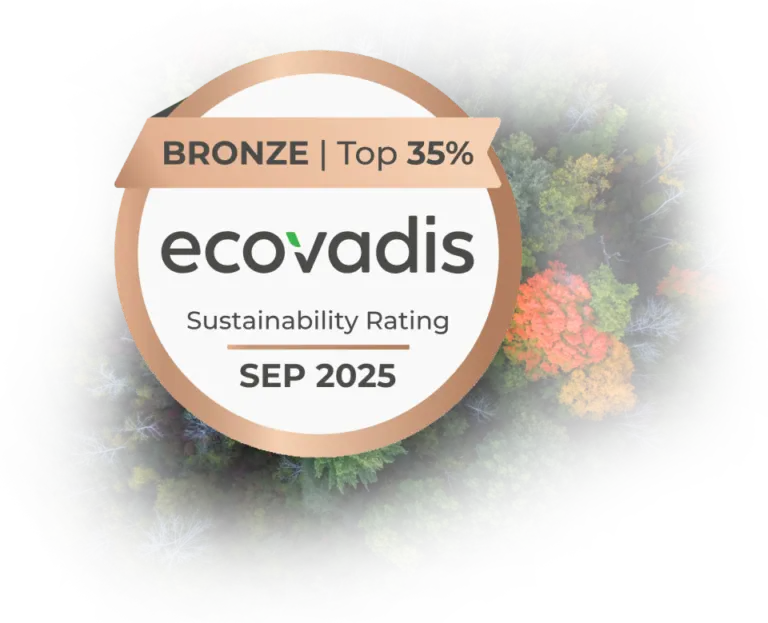
Ecovadis is a global rating agency that evaluates the sustainability performance of companies through a rating system based on environmental, social and ethical criteria, aligned with international standards. Its objective is to facilitate transparency in the supply chain and promote responsible practices.
In 2025, GRI Renewable Industries obtains a Bronze Medal in Ecovadis, which places us in the TOP 35% of companies worldwide that respond to this sustainability rating.
1.246 GWh
Energy consumption
(Refer to Financial Year 2025)
428 ktCO₂ eq
Scope 1 and 2 emissions
(Refer to Financial Year 2025)
7.3%
% of electricity consumption from renewable sources
(Refer to Financial Year 2025)
+14,89 tCO₂
Emissions intensity per tower*
(Refer to Financial Year 2025)
(*) equivalent tower
Zero emissions by 2050
Carbon Neutral Plan 2030-2050
For GRI Renewable Industries, being a low-carbon company implies being part of an important commitment to climate change, assuming a series of actions that promote and contribute to mitigate our impact. For this reason, we defined and approved the "Carbon Neutral 2030/50 Plan" and incorporated it into the company's decision-making, business strategy, management and performance.
Our goal for 2030, across all geographies and markets
- Reduce emissions associated with fossil fuel consumption by 50% (base year 2020).
- Ensure that 100% of the electricity consumed by the company comes from renewable sources.

Track the progress of the Carbon Neutral Plan annually through our public information reports.
Carbon Neutral Plan 2030-2050
Our efforts in corporate responsibility and information transparency involve external recognition of the progress we’ve made in this area.
Ecovadis. Global provider of corporate sustainability ratings.
Complaints channel
The whistle-blowing channels are the vehicle for communicating possible irregularities, non-compliance or conduct contrary to the law or the rules of conduct of the Code of Ethics.
Strategic and Transparent Commitment
The social action strategy of GRI Renewable Industries continues to evolve towards a strategic, structured and transparent model, aimed at strengthening its social performance in a consistent manner. Within this framework, the company prioritises initiatives designed under clear criteria of impact, coherence and alignment with its sustainability strategy, with the objective of maximising the value created while ensuring traceability and accountability.
GRI Renewable Industries promotes positive social impact projects in collaboration with strategic partners, focused on generating verifiable social benefits and reinforcing its commitment both to the Group’s people and to the communities in which it operates. Initiatives are designed based on the specific needs of each territory, fostering a consistent and long‑term social contribution.
The Group’s social action is structured around three core pillars: community development, social wellbeing and inclusion, promoting the creation of decent employment, skills development and training, as well as support for projects that contribute to strengthening the social fabric of local communities.
This approach enables GRI Renewable Industries to anticipate the social expectations of its stakeholders and respond with initiatives that generate shared value, transparency and tangible results, contributing to the development of more inclusive, resilient and sustainable working and social environments.
Collaborating entities
One of GRI’s priorities is to support local development in the areas where we are present. To this end, we have established collaboration agreements with non-profit organizations to develop corporate and local activities of various kinds.
Commitment and Responsibility to Generate Value
Strengthening the Internal Control Framework in 2025
Since 2015, GRI Renewable Industries has maintained a strong commitment to excellence in management and transparency, implementing a General Internal Control Framework based on the COSO methodology. This framework includes a corporate policy, a specialized committee, and robust structures of key controls both at the entity level (ELC) and process level, ensuring risk mitigation and the reliability of financial information.
During 2025, we have taken a significant step in the evolution of this model through a comprehensive update of various critical processes and the implementation of E-Learning programs designed to reinforce the proper application of these processes across the organization. These digital trainings provide our teams with practical tools and up-to-date knowledge, fostering a stronger and more sustainable internal control culture.
Additionally, a Corporate GRI Repository has been implemented, consolidating all regulatory, documentary, and operational information of GRI into a single access point. This centralized repository ensures the availability, traceability, and consistency of content, facilitating consultation and compliance with internal standards by all areas.